
Last updated November 4, 2026
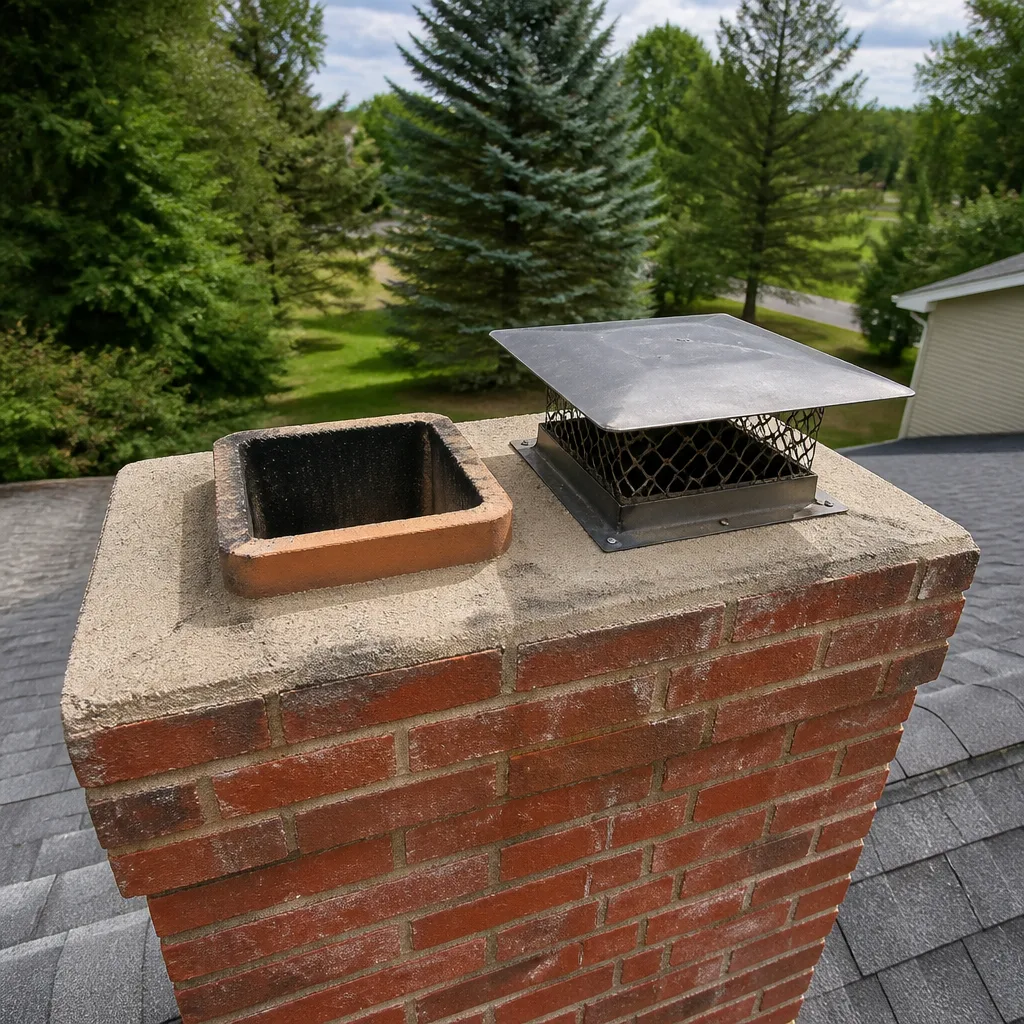 Sweep & inspection
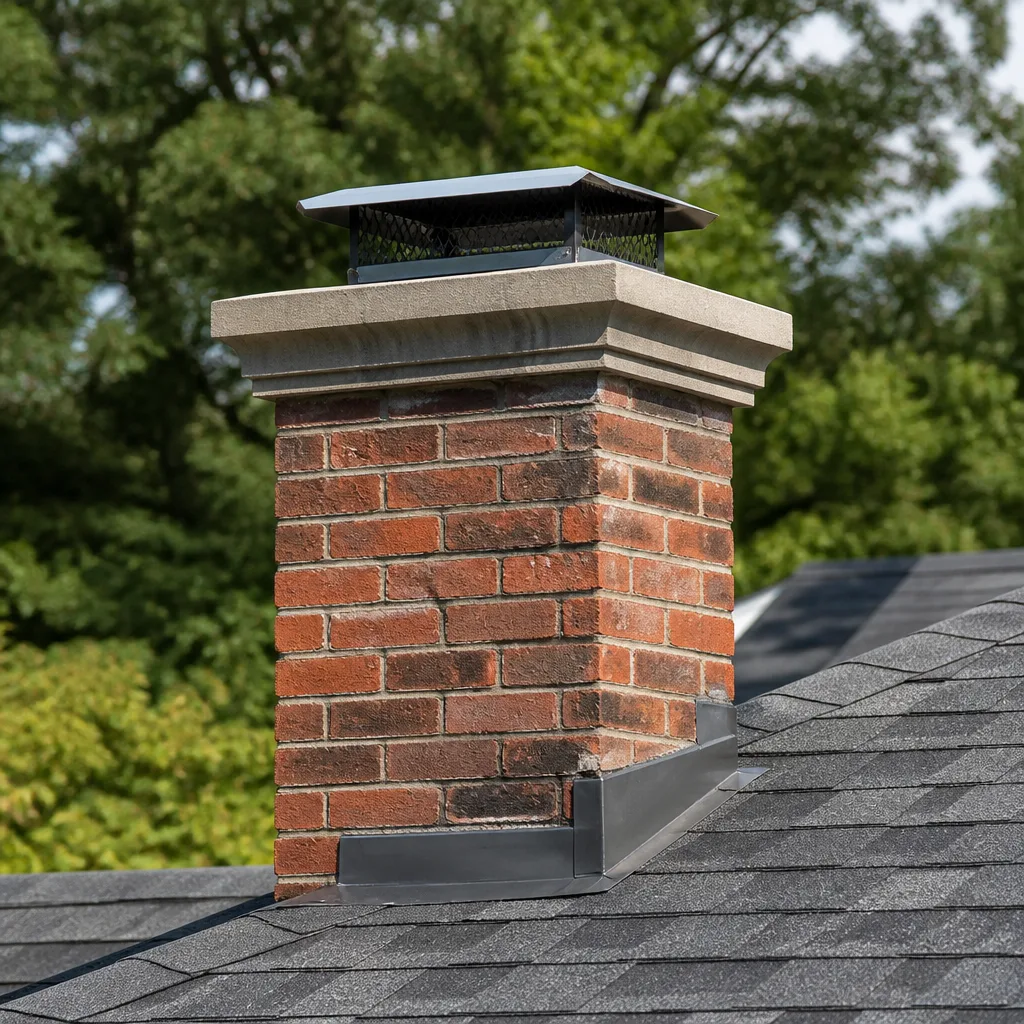 Caps & crowns
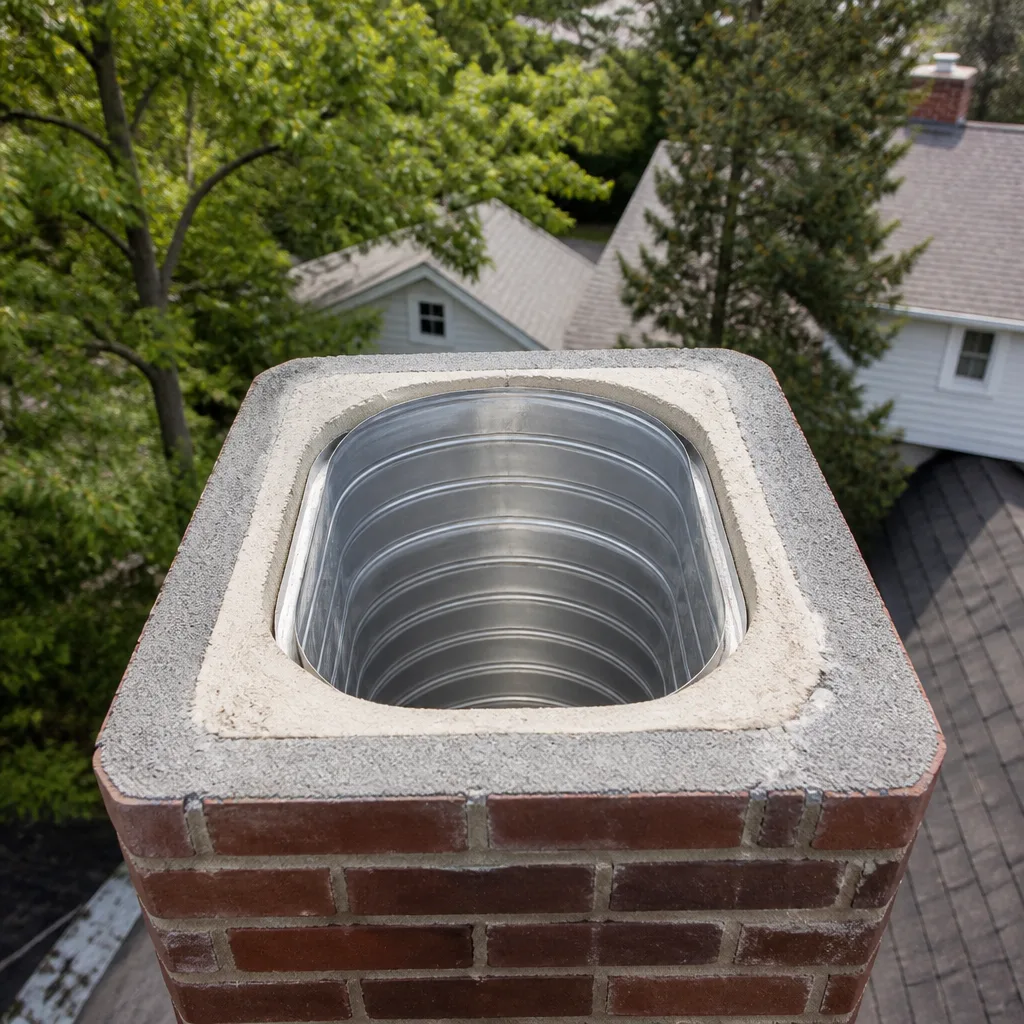 Flue relining
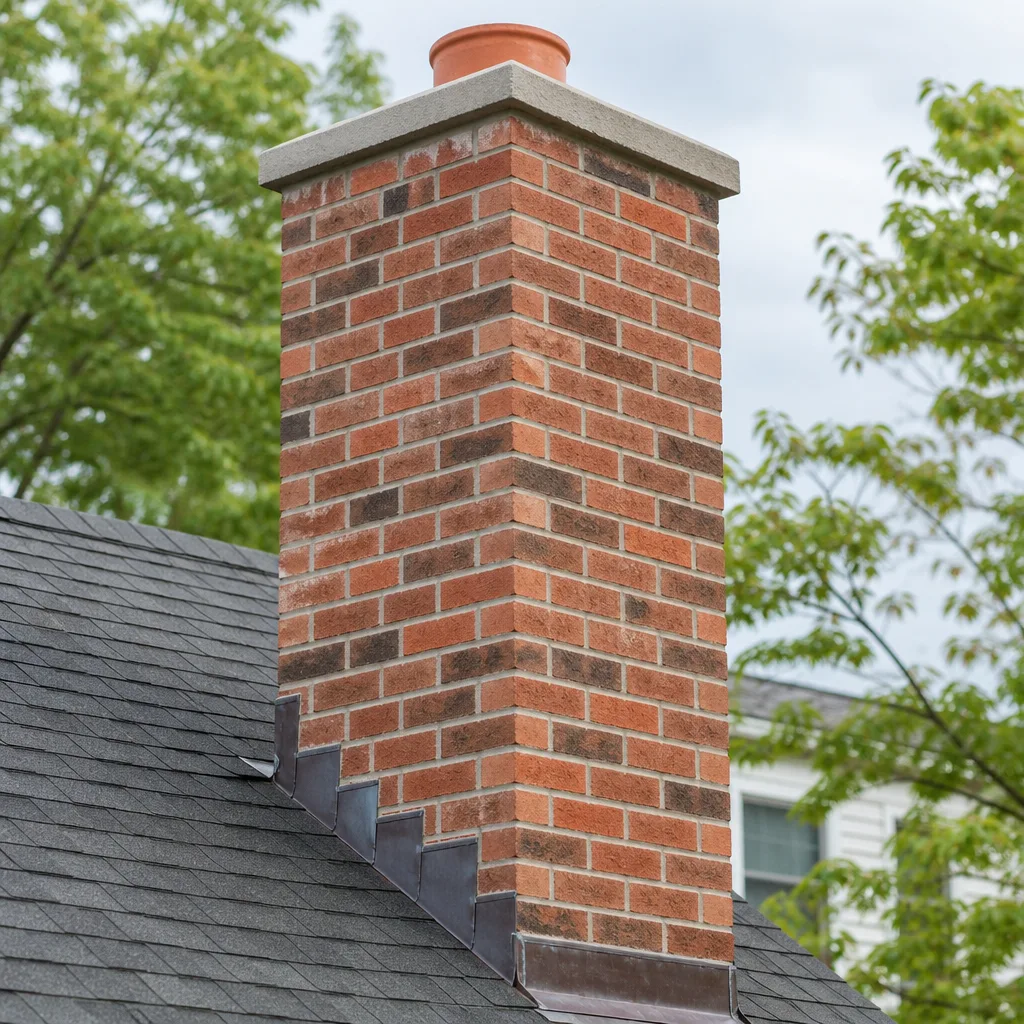 Masonry repair
 Gas fireplace service
Level 1 sweep and inspection to the NFPA 211 annual standard - flue, crown, cap, and flashing checked and photographed
Chimney sweep logs do not sweep chimneys. They loosen some creosote - which then falls where a brush and vacuum still have to collect it.
DIY vs Professional Chimney Cleaning: The Montebello Homeowner’s Decision Guide
Most homeowners assume the DIY versus professional chimney cleaning decision comes down to money, but the real dividing line is structural visibility. A homeowner with a straight single-flue masonry chimney, light creosote buildup, and a correctly sized rotary brush kit can absolutely perform a legitimate cleaning. What they cannot do is see inside the flue liner well enough to know whether that fireplace is safe to light at all. In Montebello, where so many houses date before 1990, the question is rarely whether you can brush the soot out. It is whether the chimney behind that soot is still sound. This guide lays out exactly where the DIY path is technically defensible, where it goes blind, and how to decide without guessing.
Quick Answer
DIY chimney cleaning is legitimate only when you have a straight flue, light Stage 1 creosote, the correct brush size, and a professional inspection within the past year confirming the liner is intact. Professional cleaning in Montebello is the right call when the chimney is older, the flue is offset or lined with a material you cannot visually verify, or you are burning wood regularly and seeing anything beyond powdery soot. Without a camera inspection, you are cleaning blind, and a clean-looking flue can still hide a cracked liner that is an active fire and carbon monoxide risk.
Styles & brands we work with
- Sweep & inspection
- Caps & crowns
- Flue relining
- Masonry repair
- Gas fireplace service
Table of Contents
- The DIY-Eligible Scenario: What Actually Qualifies
- What DIY Cleaning Physically Cannot Assess
- Tool and Material Spec for Homeowners Who Qualify
- The Insurance Angle: What Your Policy Says After a Chimney Fire
- The Montebello Decision Matrix: Chimney Age, Fuel Type, and Symptoms
- Creosote Stages Explained: Why Stage Matters More Than You Think
- Montebello-Specific Factors: Climate, Housing Stock, and Code
- What a Professional Cleaning in Montebello Actually Involves
The DIY-Eligible Scenario: What Actually Qualifies
The DIY path is not a cost decision. It is a geometry and material decision. A chimney qualifies for self-cleaning only when four conditions hold at the same time, and in our experience at Chimney Sweep Montebello, maybe one in five fireplaces in this city meets all of them.
Here is the specific profile:
- Straight single flue. The flue runs vertically from the firebox to the cap with no offset, no bend, and no shared flue serving a second appliance. A straight flue lets a brush pass cleanly without snagging on corbeling or getting stuck at an angle change. Older Montebello homes with original masonry chimneys often have offsets you cannot see from the firebox.
- Stage 1 creosote only. You see powdery, gray-brown soot that brushes off with light pressure. Not shiny. Not tar-like. Not crusted in layers. If a flashlight shows anything glossy or flaky, that is Stage 2 or Stage 3, and a homeowner brush will not remove it safely or completely.
- Professional inspection within the past 12 months. This is the piece most DIY guides skip. A cleaning removes soot. It does not tell you whether the flue liner behind that soot is cracked, spalled, or separated at a joint. You need a camera inspection to confirm the chimney is structurally sound before you put a brush in it and then light a fire afterward.
- Correctly sized equipment. A brush that is too small misses the creosote. A brush that is too large jams. Sizing is by actual flue dimension, not fireplace width, and this is where most hardware-store kits fail.
If all four conditions hold, DIY brushing is a reasonable maintenance step between professional inspections. If any one of them fails, you are not saving money. You are deferring a necessary diagnostic, and in a pre-1990 house, deferral is the expensive path.
What DIY Cleaning Physically Cannot Assess
The core argument against routine DIY cleaning is not that sweeping is dangerous. It is that sweeping is blind. A brush tells you nothing about the condition of the surfaces it scrubs. In Montebello’s housing stock, where chimneys have been in service since the 1950s, 1960s, and 1970s, the failure points are almost always invisible from the firebox, and they are the points that cause chimney fires and carbon monoxide intrusion.
Here is what a homeowner with a brush kit is physically unable to evaluate:
Flue Liner Integrity
Clay tile liners crack from decades of thermal cycling. The crack may be a hairline fissure that opens only when the chimney gets hot. A brush passes over it. A camera finds it. A cracked liner lets heat and combustion gases reach the surrounding masonry and, in worst cases, framing. This is the single most common issue we document in Montebello homes built before 1980.
Smoke Chamber Corbeling Condition
The smoke chamber is the inverted funnel above the firebox that transitions smoke into the flue. It is built with corbeled brick, meaning each course steps slightly inward. Creosote accumulates on those ledges. Gaps open between the steps. A brush from the top of the chimney never touches these surfaces, and a brush from the bottom cannot reach them either. Only a technician working with proper rods and lighting can access the smoke chamber, and only a camera can document its condition.
Firebox Back-Wall Spalling
The firebox is the one area a homeowner can see, but most people do not know what they are looking at. Spalling is when the firebrick face pops off from repeated heating and cooling, exposing the softer brick behind it. Loose or missing firebrick does not sweep back into place. It is a repair item, and ignoring it lets heat reach materials that were never meant to take direct flame.
Flue Cap and Crown Condition
The top of the chimney is the least inspected and most weather-exposed part of the assembly. Montebello does not get freeze-thaw cycles the way colder climates do, but it does get dry-season heat and occasional heavy rain, and a cracked crown lets water into the chimney chase. Rusted or missing flue caps also allow birds and debris into the flue. You need to see the top of the chimney to know, and that means getting on the roof.
So the honest framing is this: a DIY cleaning is a maintenance task. It is not an inspection. And without the inspection, the cleaning creates false confidence.
Tool and Material Spec for Homeowners Who Qualify
If you have confirmed the DIY-eligible profile, do not buy the first kit you see at a hardware store. Most consumer kits are sized for a generic flue and made with polypropylene bristles that fold over the moment they hit real creosote. Here is what actually works.
Brush Sizing by Flue Dimension
Measure the actual inside dimension of your flue, not the fireplace opening. For a square or rectangular clay tile flue, the brush should match the flue dimension exactly. For a round flue, match the diameter. If your flue is 8×8 inches, you need an 8-inch square brush. A 6-inch brush will leave creosote on all four corners. An 10-inch brush will jam in the flue.
Rod Type and Connection
Use fiberglass rods with a secure threaded connection, typically 3/8-inch NPT. Fiberglass flexes enough to navigate minor offset without snapping like PVC. Avoid twist-lock rods that can separate inside the flue. If a rod separates, you are now hiring someone to retrieve a brush from your chimney, which is a more expensive call than the sweep would have been.
Vacuum Specification
Do not use a standard shop vac. Soot is measured in microns, and a consumer shop vac blows the finest particles straight through the filter and into the room. You need a vacuum with a HEPA filter rated for fine dust, and ideally a two-stage setup. Place the vacuum hose at the firebox opening while you brush from the top, and seal off the firebox opening with a tarp or plastic sheeting taped in place with a small access slit for the hose. Dryer-vent-grade and chimney-grade vacuums use HEPA filtration precisely because this dust is not something you want settling on your furniture and in your lungs.
Personal Protection
Wear an N95 or better respirator, not a nuisance dust mask. Eye protection is non-negotiable. Creosote is an irritant. Rod handling from a roof also means proper footwear and a harness if your roof pitch warrants it. If you are not comfortable on a roof, that is a legitimate disqualifier for DIY work, because top-down cleaning is the only method that reliably covers the full flue length.
This is the specification-level tooling. It costs real money. When we quote a chimney sweep in Montebello, homeowners sometimes realize that a proper HEPA vacuum and brush kit costs about the same as having a technician do the work with equipment already dialed in. That is worth factoring into the decision.
The Insurance Angle: What Your Policy Says After a Chimney Fire
Most homeowners never read the maintenance clauses in their policy until they are filing a claim, and by then it is too late. The insurance angle is not about whether you are allowed to clean your own chimney. You are. It is about what happens after a chimney fire when the insurer asks who performed the maintenance.
Homeowner’s insurance policies typically require the homeowner to maintain the property against preventable damage. A chimney fire is usually classified as preventable, because creosote accumulation is a known, controllable variable. Here is the process a claim triggers:
- The adjuster reviews the fire origin. If a chimney fire is suspected, the adjuster looks for an ignition source in the flue, typically creosote accumulation or a compromised liner.
- Maintenance records are requested. This is where the DIY conversation changes. If you have a receipt from a professional sweep showing a cleaning and inspection within the past year, you have documentation that you performed prudent maintenance. If you cleaned it yourself, you have no third-party record.
- The burden shifts to you. Without a professional inspection record, the insurer may argue the fire resulted from a condition you could have identified and addressed had the chimney been professionally evaluated. The claim can be reduced or denied, and a denied chimney-fire claim often becomes a denied structure claim for the wall and roof damage the fire caused.
- Causation is disputed. The insurer’s expert may point to a liner crack or structural deficiency that a brush cleaning could not have caught. This is not about blaming you. It is about the fact that your maintenance did not include the diagnostic step that would have caught the problem.
The documentation gap is avoidable. A professional cleaning in Montebello produces a receipt, a condition report, and typically photo documentation. That is not an upsell argument. It is the difference between a scheduled maintenance event and a contested claim. We have seen homeowners in Montebello with legitimate claims stall for months because they could not produce a professional inspection record. The cleaning itself was never the issue. The missing documentation was.
The Montebello Decision Matrix: Chimney Age, Fuel Type, and Symptoms
This is the decision tree we promised. Work through it in order. It applies specifically to wood-burning fireplaces and masonry chimneys, which describe the large majority of Montebello homes built before 1990.
Step 1: How old is the chimney?
- Under 10 years old, professionally inspected at installation. If you have a newer chimney with a documented inspection, Stage 1 creosote, a straight flue, and the right tools, DIY brushing between professional cleanings is reasonable.
- 10 to 25 years old. The liner has been through hundreds of thermal cycles. A professional camera inspection is the only way to rule out hairline cracking. Cleaning should be professional unless a recent inspection says otherwise.
- 25 years or older. This is the majority of Montebello’s fireplace stock. Assume the liner has defects until a camera proves otherwise. DIY cleaning on an uninspected 40-year-old chimney is not a cost savings. It is a gamble with an unknown condition.
Step 2: What are you burning?
- Seasoned hardwood, burned hot with good draft. Produces lighter creosote, but still some. Stage 1 is possible to manage with DIY if the other conditions hold.
- Softwood like pine, or wet wood. Produces resins that create Stage 2 creosote quickly. This does not brush out with a homeowner kit. Professional cleaning with mechanical or chemical treatment is required.
- Manufactured logs or occasional fires. Lower creosote volume, but the chimney still needs inspection for nesting, debris, and moisture. Occasional use does not mean the liner is in good shape. It means the liner has been sitting unused and unobserved.
Step 3: What do you observe?
- Powdery gray-brown soot, no odor. Likely Stage 1. If the chimney is young and straight, DIY is defensible.
- Shiny, tar-like, or crusted black residue. Stage 2 or Stage 3 creosote. This is a professional cleaning, and possibly a mechanical or chemical treatment. It will not brush off.
- Smoke entering the room, or a smoky smell when the fireplace is not in use. Draft problem or liner obstruction. Not a cleaning issue until diagnosed.
- Visible cracks in the firebox, loose bricks, or white staining on the exterior masonry. Spalling or water intrusion. Repair territory. A cleaning will not address it.
Step 4: When was the last professional inspection?
- Within 12 months, documented, liner clear. The strongest case for DIY maintenance between inspections.
- 1 to 5 years ago. Too long. Get an inspection before you burn another season.
- Never, or you do not know. This is the house you just bought or inherited. Do not clean it yourself. Do not even light a fire until it is inspected. The previous owner’s maintenance is unknown, and in Montebello, many fireplaces in older homes have not been serviced in decades.
Creosote Stages Explained: Why Stage Matters More Than You Think
Creosote is not one substance. It is a progression of deposits that form at different temperatures and fuel conditions, and the stage determines what removal method actually works. Most DIY kits are built for Stage 1 only, and most homeowners do not know how to identify what they are looking at.
Stage 1: Powdery soot
Gray-brown, soft, and brushable with light pressure. Forms during hot, efficient fires with seasoned wood. This is the only stage a homeowner brush kit can remove effectively.
Stage 2: Tar flakes
Shiny black flakes that look like crushed charcoal or dried tar. Forms when flue gases cool too quickly, usually from wet wood or restricted airflow. The flakes are brittle but adhere to the flue wall. A brush will remove the top layer and leave the film, which then bakes into Stage 3 on the next fire.
Stage 3: Glazed creosote
Hard, shiny, and baked onto the flue surface. This is what chimney fires feed on. Stage 3 creosote does not brush off. In our experience, it responds to mechanical removal with specialized rotary tools, and in some cases chemical treatment to break down the glaze first. No amount of homeowner effort removes it.
The stage is determined by burning habits as much as by time. A Montebello homeowner who burns occasionally with dry wood may take several seasons to build Stage 2. Someone burning wet wood or closing the damper too early can create Stage 2 in a single season. The only way to know for sure is to look at the flue surface, and the only way to do that thoroughly is with a camera.
Montebello-Specific Factors: Climate, Housing Stock, and Code
Montebello sits inland, east of downtown Los Angeles, with mild winters and a dry season that stretches most of the year. That shapes how chimneys age here in specific ways.
First, Montebello does not deal with freeze-thaw cycling. That means masonry chimneys do not have the cracking pattern you see in colder climates, but they still age. Thermal cycling from the fires themselves, combined with summer heat and occasional heavy rain, is enough to open hairline cracks in older clay liners and to let water penetrate crowns that were never sealed properly.
Second, the housing stock is the story. Montebello has a large inventory of homes built in the 1940s through the 1970s. Those chimneys were built with clay tile liners, which were the standard of the era, and those liners are now decades beyond their typical service life. We find cracked liners in Montebello fireplaces on a routine basis, and the homeowner almost never knows it until a camera goes in.
Third, annual maintenance is rare rather than routine. Because winters are mild, fireplaces are often used for ambiance rather than as a primary heat source, which means they go years without attention. That gap is exactly when creosote builds, liners crack, and birds or debris find their way into uncapped flues.
Code-wise, Montebello follows California building standards, and any structural repair, relining, or resurfacing work must comply with those requirements. That is where the material question becomes relevant. When we do repairs in Montebello, we work with contractor-grade product lines, including DuraFlex for flexible liner systems, HeatShield for flue resurfacing, and Olympia Chimney for caps and termination systems. These are not big-box products. They are the brands specified when the job has to pass inspection and perform for decades.
What a Professional Cleaning in Montebello Actually Involves
If you have never had a professional sweep, the process is more involved than most people expect, and understanding it clarifies what you are actually paying for. A legitimate chimney sweep is a cleaning plus a diagnostic inspection, not just a brushing.
Here is the sequence at Chimney Sweep Montebello:
- Site protection. Drop cloths and HEPA vacuum setup around the fireplace. The goal is zero soot migration into the living space.
- Visual assessment from the firebox. We look at the firebox condition, damper operation, and what is visible of the smoke chamber before any cleaning begins.
- Mechanical cleaning from the roof. Brushes sized to the actual flue dimensions, run from the top down with fiberglass rods. The cap comes off, and the flue gets brushed through its full length.
- Smoke chamber cleaning. This is the step most DIY jobs skip entirely. We clean the corbeled ledges with specialized tools, because that is where creosote accumulates and where the structure is least visible.
- Camera inspection. After the flue is clear, a camera goes down the full length. This is where liner cracks, joint separations, and smoke chamber damage are documented. The cleaning makes the inspection possible; the inspection is what tells you whether the chimney is safe.
- Condition report. We tell you what we found, what it means, and whether action is needed. If the liner is cracked, we talk about HeatShield resurfacing or DuraFlex relining, depending on the condition and the flue geometry. If the cap is missing or rusted, we discuss replacement options. Nothing is recommended without camera evidence you can see for yourself.
- Documentation. You get a receipt and a condition report. That is the insurance-relevant paperwork we discussed, and it is part of the service, not an add-on.
This is the difference between a cleaning and a certification of condition. A brush kit produces neither.
Common Mistakes to Avoid
- Treating a cleaning as an inspection. A brush removes soot. It does not find cracks. This is the most common and most expensive misunderstanding in Montebello, where older liners fail quietly.
- Buying a brush kit without measuring the flue. An undersized brush leaves creosote in the corners. An oversized brush jams. Both end with you calling a professional to finish or fix the job.
- Using a shop vac for soot. Soot particles pass through a standard filter and coat the room in a fine dust you will not notice until it has settled into fabric and carpet. HEPA filtration is the requirement, not a preference.
- Ignoring Stage 2 creosote because the fire still works. Shiny black flakes mean the flue is coating with fuel. The fire works right up until the coating ignites. Stage 2 or Stage 3 creosote is a professional removal, no debate.
- Skipping the cap replacement because the chimney still draws. A missing or damaged cap is how birds, debris, and direct rain enter the flue. The draw might be fine while the obstruction builds. Then it is not fine.
- Cleaning a chimney you just bought without an inspection. The previous owner’s maintenance history is unknown. In Montebello’s older housing stock, many fireplaces have not been serviced in years, and the first cleaning should be the one that comes with a camera.
- Assuming a gas fireplace chimney is maintenance-free. Gas logs produce corrosive byproducts and can still accumulate debris and moisture. The flue needs inspection even if there is no creosote.
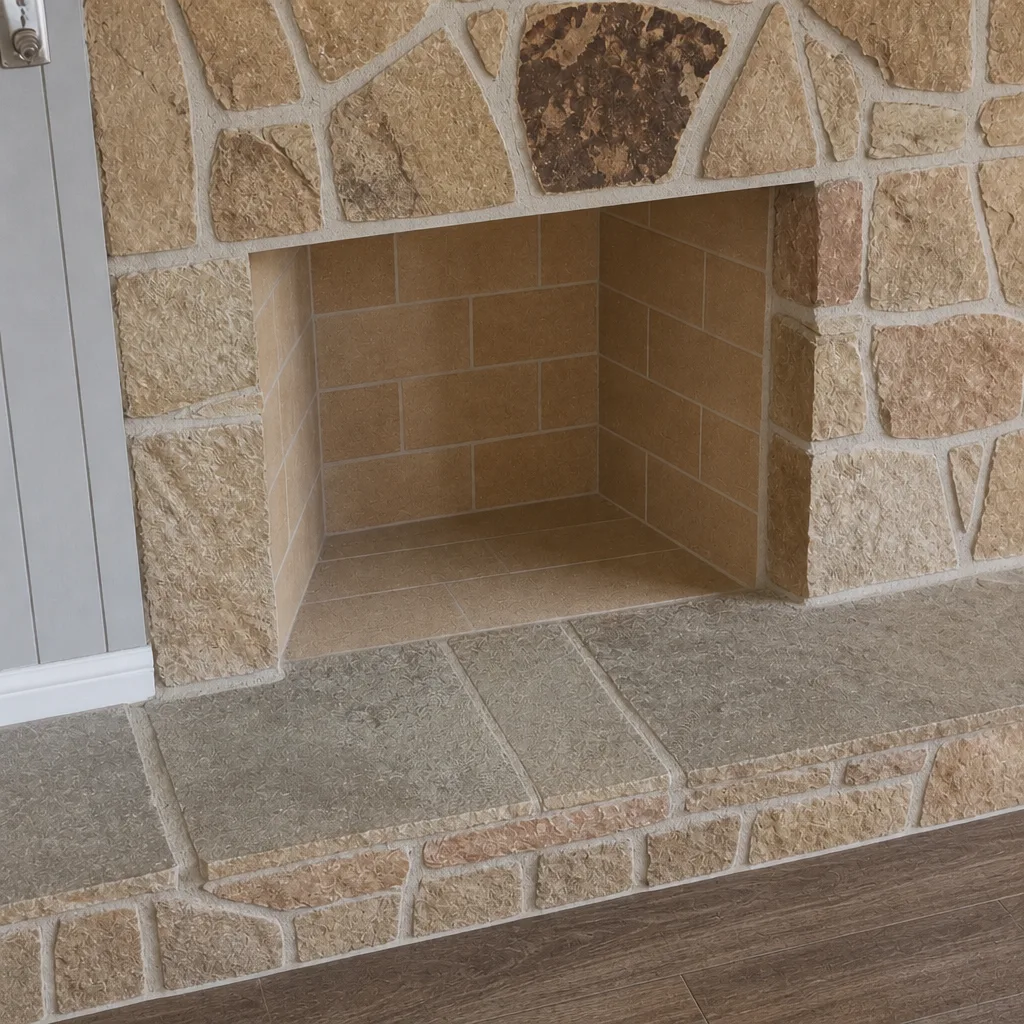
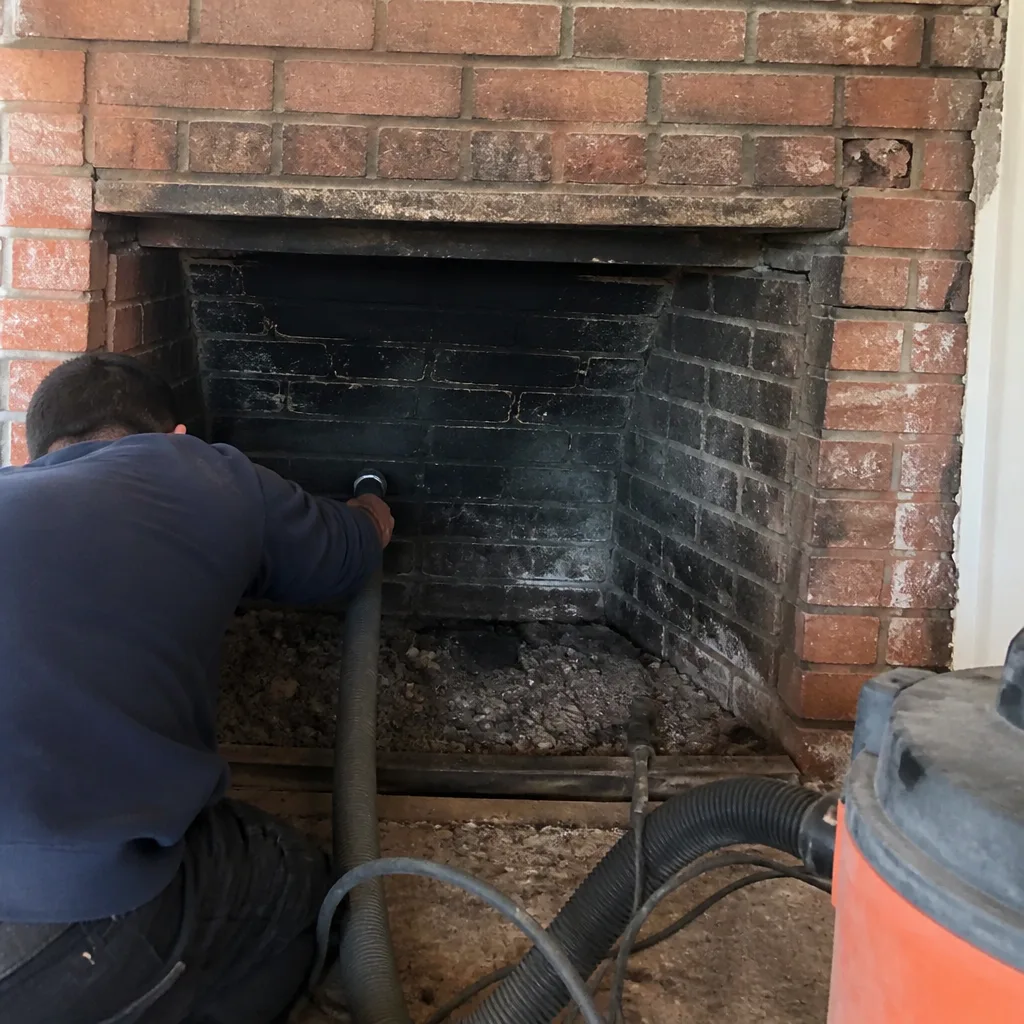
See the difference
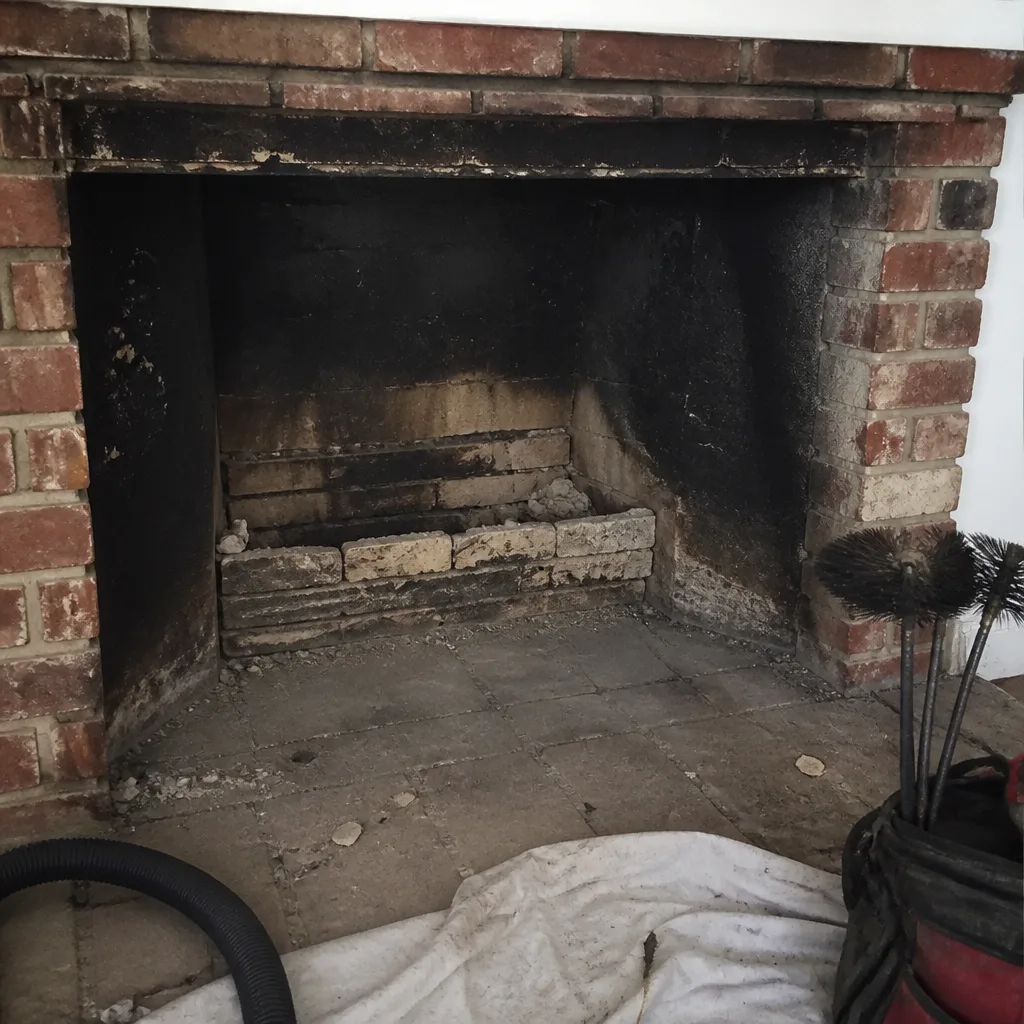 Before
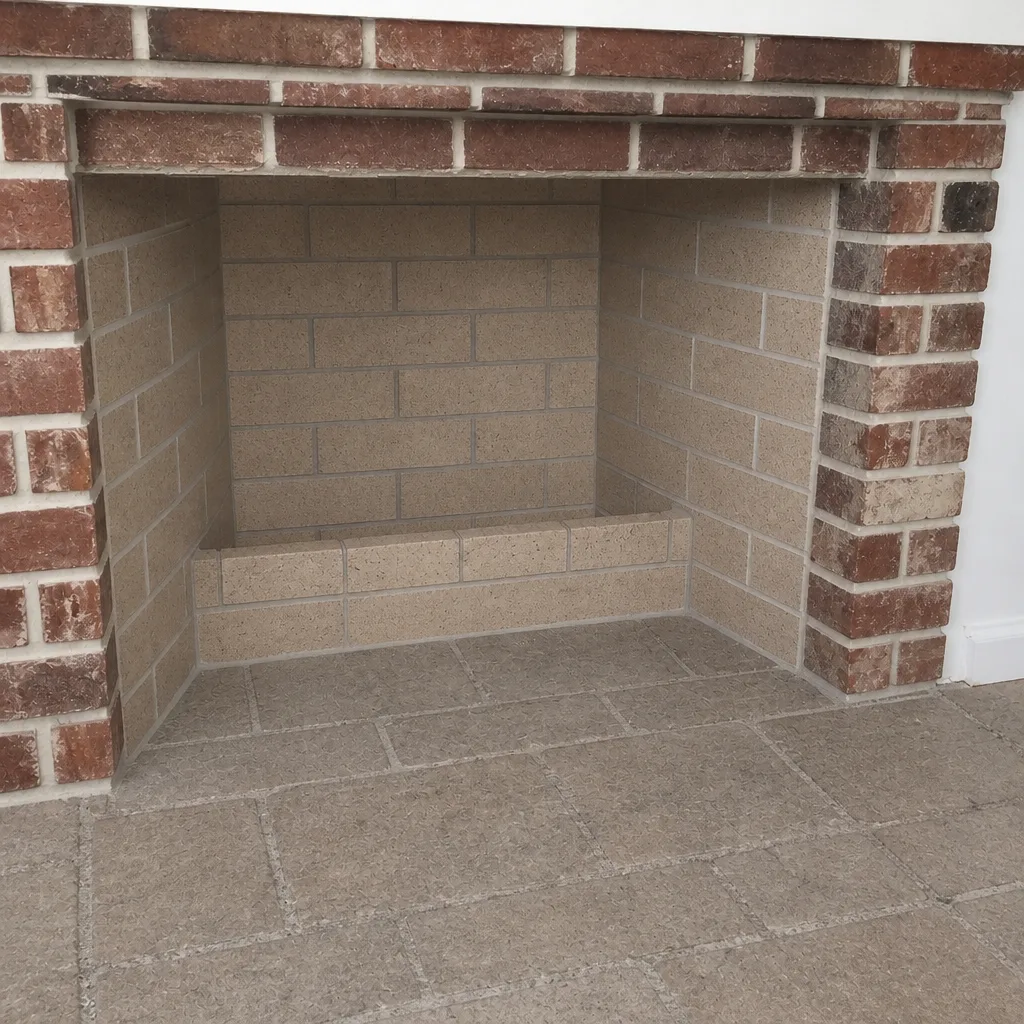 After
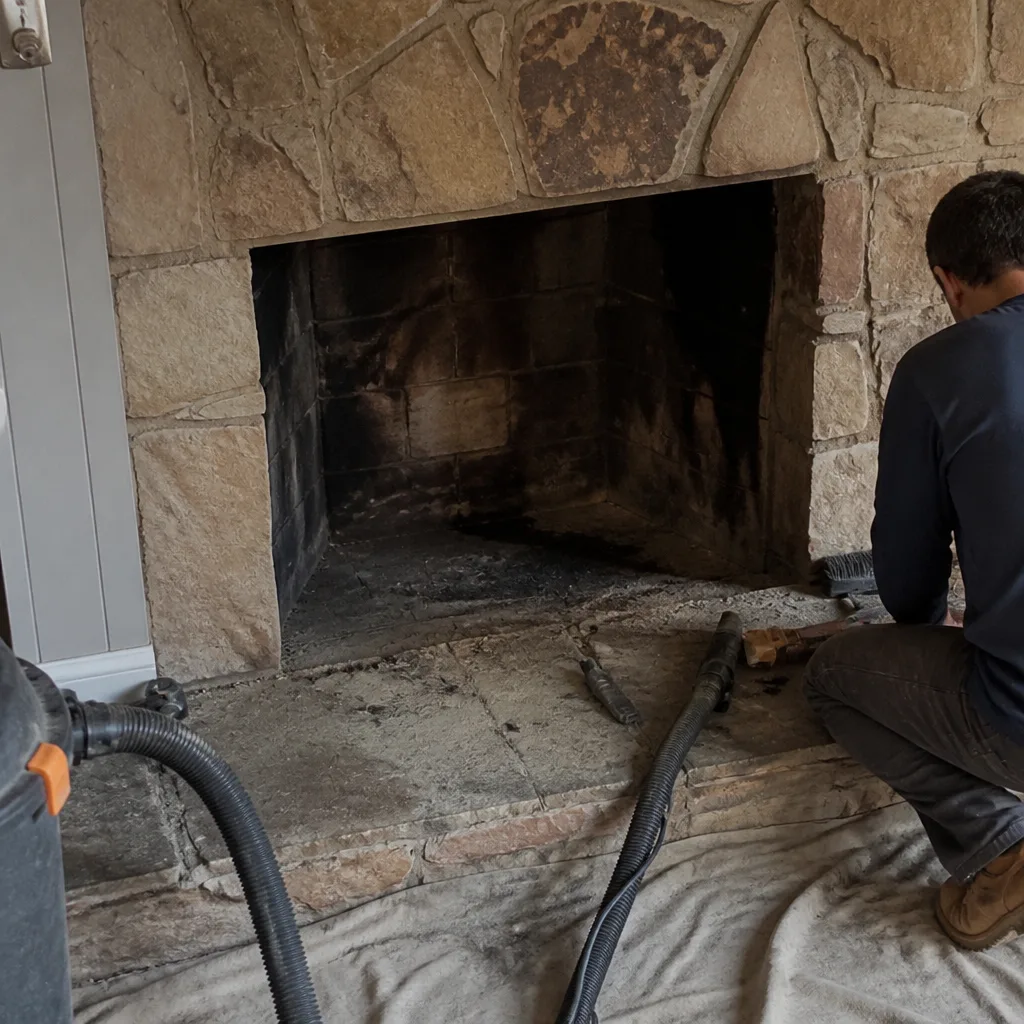 Before
 After
 Before
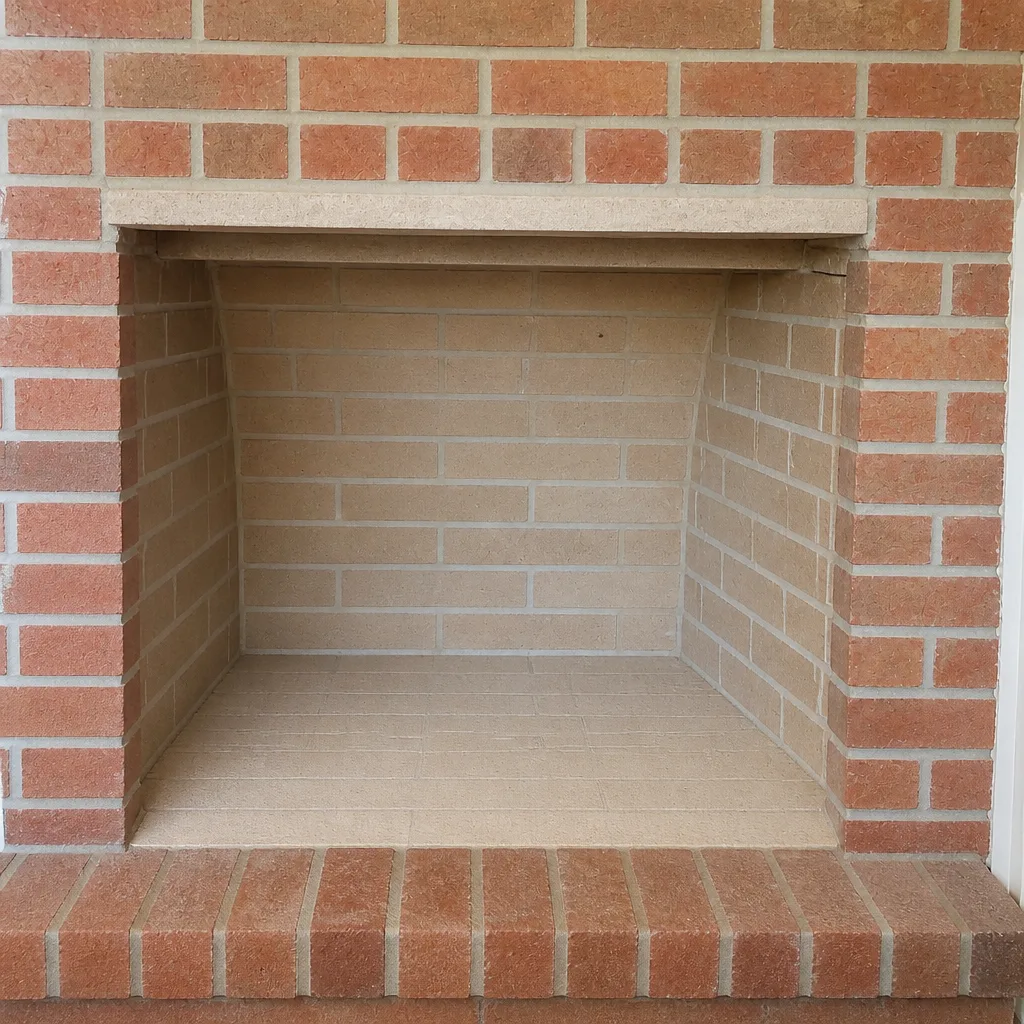 After
When to Call a Professional
Call a professional when the chimney is older than you can document, when you see shiny or crusted creosote, when smoke enters the room, when you have not had an inspection in over a year, or when you simply do not want to be on your roof with a brush kit and a HEPA vacuum that cost you more than the service call. Call a professional when you need documentation for your insurance file, because that receipt is part of what you are buying. And call a professional when the flue has an offset, because a homeowner rod kit will bind in the bend and you will be calling one anyway. Chimney Sweep Montebello offers free estimates in Montebello. Call (833) 362-8107. We answer 24/7. Fast dispatch from 7am to 7pm, Sunday through Friday.
Frequently Asked Questions
A standard chimney sweep and inspection in Montebello typically falls in the $200 to $400 range depending on flue height, creosote stage, and roof access. Repairs or resurfacing are quoted separately by written estimate after a camera inspection. Call (833) 362-8107 for a free, exact quote on your chimney.
Yes, if the flue is straight, the creosote is Stage 1, you have a correctly sized brush and HEPA vacuum, and a professional camera inspection within the past year confirmed the liner is intact. If any of those conditions is missing, you are cleaning blind and assuming risk the inspection would have identified.
The standard guidance for a wood-burning fireplace is once per year or after every cord of wood burned, whichever comes first. In Montebello’s mild climate, where fireplaces are often used seasonally, an annual cleaning and inspection before the first fire of the season is the simplest schedule to keep.
Creosote accumulates in stages, and what starts as powdery soot becomes shiny tar flakes and eventually glazed fuel coating the flue. A chimney fire becomes possible the longer that coating builds, and a liner crack that goes undetected gets worse with every thermal cycle. Skipping the cleaning skips the inspection, and the inspection is where the real problems are found.
Yes. The surfaces you can see from the firebox are not the surfaces that fail. Liner cracks, smoke chamber gaps, and crown damage are all invisible without a camera after the soot is removed. A clean-looking chimney is not evidence of a sound chimney.
Yes. Both services address the same core risk: combustion exhaust and lint are both ignition hazards, and both require the same diagnostic mindset. Dryer vent cleaning removes lint accumulation that can ignite inside the vent, and it is the same principle as removing creosote from a flue. We offer both services because a home has more than one exhaust path, and both need attention.
The Bottom Line
The DIY versus professional chimney cleaning decision in Montebello is not a moral question and it is not purely a cost question. It is a capability boundary. A homeowner with a straight, recently inspected, lightly used chimney and the right equipment can perform a legitimate maintenance brushing. What that homeowner cannot do is see the liner, document its condition, or clean a flue that has moved past Stage 1 creosote. In a city where most fireplaces are older than the average homeowner, the inspection is the actual service. The brushing is just how you get to it. If you are not sure which path applies to your chimney, call Chimney Sweep Montebello at (833) 362-8107 for a free estimate. We answer 24/7. Fast dispatch from 7am to 7pm, Sunday through Friday. And if we find something, we will show you the camera video before we ever recommend a repair.
Written by the team at Chimney Sweep Montebello, serving Montebello since 2015.